TL;DR Quick Answers
Kusshi Oysters
Kusshi oysters are small, slow-grown Pacific oysters cultivated in cold Canadian waters. They’re known for dense, ivory-colored meat, a naturally sweet flavor, and consistent quality—making them a preferred choice for raw bars and chef-driven service.
Top Takeaways
Ivory opacity signals quality.
It reflects slow growth, higher glycogen, and denser meat—not marketing language.Cold-water growth matters.
Kusshi oysters develop better texture and natural sweetness through slow cultivation.Chefs use visual cues first.
Ivory opacity helps assess quality before tasting.Biology shapes flavor.
Growth conditions directly affect texture, opacity, and balance.Consistency defines Kusshi oysters.
Reliable farming produces dependable results on the plate.
What “Ivory Opacity” Means in Kusshi Oysters
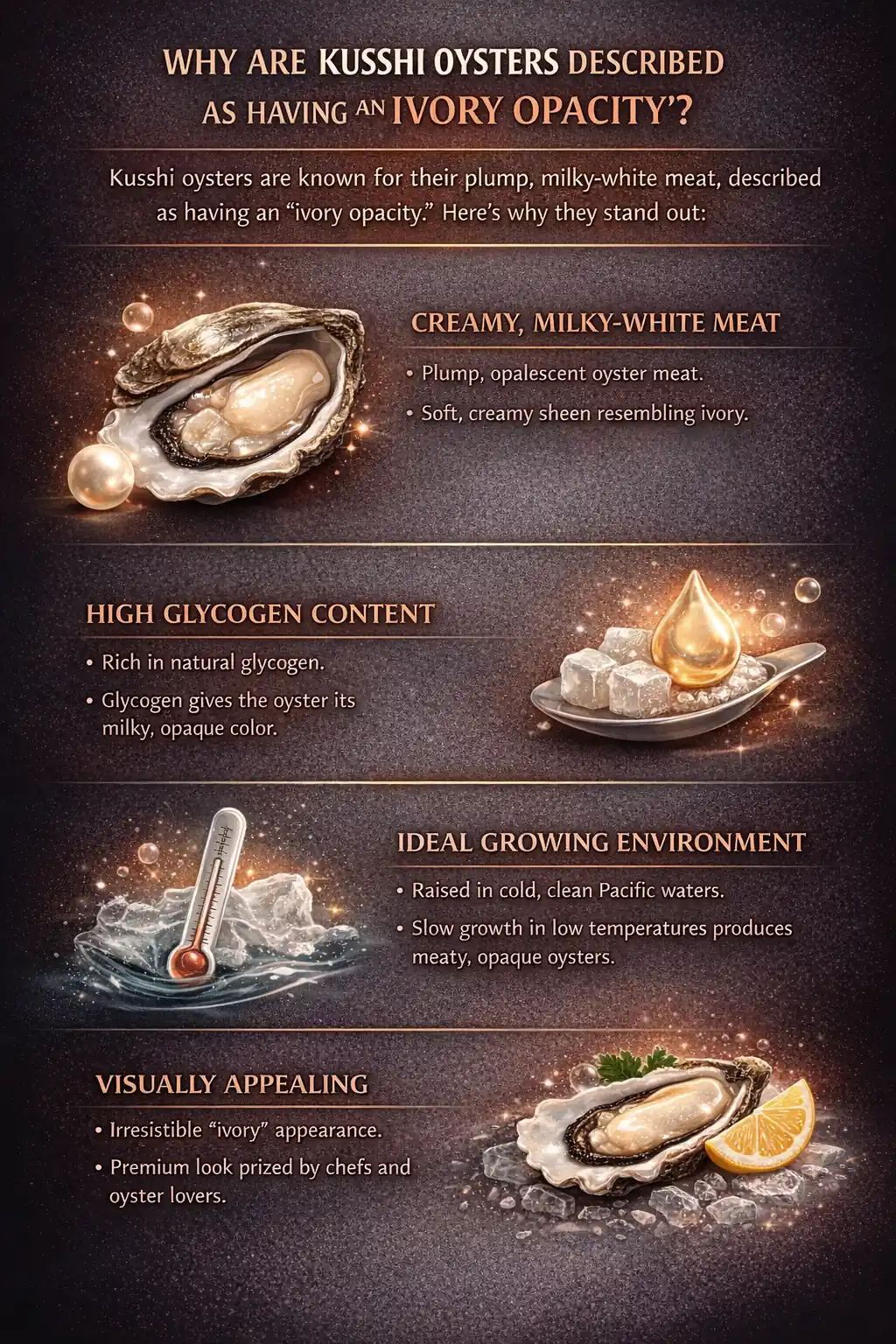
Ivory opacity refers to the creamy, opaque appearance of Kusshi oyster meat, which differs noticeably from the translucent flesh common in many Pacific oysters. This visual quality is not cosmetic—it reflects the oyster’s internal composition and how it has developed over time. In Kusshis, the ivory tone signals a higher concentration of glycogen, the natural energy reserve that contributes to both sweetness and body.
How Slow Growth Creates Kusshi’s Signature Appearance
Kusshi oysters are cultivated in cold, nutrient-dense waters where growth is intentionally slow. This extended growth cycle allows the oyster to build denser tissue rather than thin, watery flesh. As muscle fibers tighten and glycogen accumulates, the meat becomes visibly opaque, taking on the soft ivory coloration chefs associate with premium Kusshis.
Why Chefs Use Ivory Opacity as a Quality Indicator
In professional kitchens, ivory opacity serves as a reliable pre-taste quality marker. Chefs know that when a Kusshi displays this creamy density, it is more likely to deliver the balanced sweetness, firm texture, and clean finish the variety is known for, much like visual freshness cues used when selecting hake fish. The visual cue helps differentiate Kusshis from faster-grown oysters that may appear plump but lack depth of flavor.
What Ivory Opacity Reveals About Flavor and Texture
The same traits that produce ivory opacity also define Kusshi oysters on the palate. Higher glycogen levels translate to a naturally sweet profile, while the compact structure creates a satisfying, almost buttery bite. Rather than briny sharpness, Kusshis offer a smooth, rounded flavor that reflects their careful cultivation.
“When you work with Kusshi oysters day in and day out, the ivory opacity becomes a shortcut to quality. That creamy density tells us the oyster grew slowly, stored more glycogen, and will deliver the sweetness and structure chefs expect—before it ever reaches the palate. It’s one of the few visual traits in oysters that consistently predicts flavor and texture, making it a reliable input when building a recipe costing template.”
Essential Resources
For chefs, buyers, and serious oyster enthusiasts, understanding Kusshi oysters goes beyond tasting notes. The resources below are selected to support informed sourcing, menu decisions, and product knowledge, using references commonly relied on in professional kitchens and seafood programs.
Oyster Encyclopedia — Foundational Identification & Growing Background
https://oysterencyclopedia.com/encyclopedia/kusshi-oysters/
A reliable starting point for understanding Kusshi oysters’ origin, species classification, and farming methods, helping professionals place them accurately within the broader Pacific oyster category.
Kusshi Oysters (Official Producer) — Farming Practices & Product Intent
https://kusshioysters.com/
Direct insight from the grower, outlining how Kusshi oysters are cultivated in Deep Bay, British Columbia, and why slow growth and careful handling are central to their consistency and quality.
Pangea Shellfish Oysterology — Buyer-Focused Specifications
https://www.pangeashellfish.com/oysterology/kusshi-oyster
Provides practical product specifications, flavor expectations, and handling notes commonly used by chefs and seafood buyers when comparing oyster varieties.
The Oyster Guide — Regional Terroir & Environmental Context
https://www.oysterguide.com/maps/british-columbia/kusshi/
Offers geographic and environmental context that explains how growing conditions influence Kusshi oysters’ shell shape, meat density, and overall eating quality.
Coastal Seafoods — Market & Customer-Facing Overview
https://www.coastalseafoods.com/products/west-coast-oysters/kusshi
A commercial perspective that highlights key selling points and flavor descriptions useful for retail, hospitality, and front-of-house communication.
Oysterater — Consumer Tasting Impressions & Comparisons
https://www.oysterater.com/oyster/kusshi/
Aggregated tasting notes and ratings from experienced oyster consumers, providing additional perspective on how Kusshi oysters are perceived across different palates.
These resources support informed sourcing and menu decisions, with Kusshi oysters fitting seamlessly into professional workflows at every level of the kitchen brigade system, from procurement to front-of-house communication.
Supporting Statistics
The following data highlights why oyster professionals pay close attention to origin, growth conditions, and physical quality indicators when evaluating oysters like Kusshi.
Key U.S. Oyster Industry Facts
Oysters dominate U.S. marine aquaculture
Over 80% of U.S. marine aquaculture value comes from bivalves, primarily oysters.
This concentration explains why chefs and buyers are trained to assess oysters closely by variety and condition.
Source: https://www.fisheries.noaa.gov/national/aquaculture/us-aquacultureFarmed oysters now rival wild supply
U.S. oyster supply by weight:
32% aquaculture
26% wild harvest
41% imports
In practice, this makes visual quality cues—like meat density and opacity—essential when comparing oysters grown under different conditions.
Source: https://www.fisheries.noaa.gov/s3/2025-06/FINAL-Oyster-Aquaculture-Market-Outlook-Factsheet-MAY2025.pdfOyster biology influences meat quality
A single adult oyster can filter 25–50 gallons of water per day.
In cold-water environments, slower filtration is commonly associated with:
Denser meat
Higher glycogen storage
More opaque, ivory-colored flesh
Source: https://oceanconservancy.org/wildlife-library/oyster/The CDC estimates 80,000 vibriosis cases annually in the U.S.
Over 50,000 cases are linked to foodborne exposure, most often raw oysters.
This risk profile is why chefs favor well-managed, cold-water oysters and rely on firm texture and opacity as quality checks.
Source: https://www.cdc.gov/vibrio/about/index.html
Final Thought & Opinion
After handling Kusshi oysters in professional kitchen settings, one detail consistently stands out before tasting: the ivory opacity. It isn’t descriptive flair—it’s a practical quality signal developed through experience.
Why ivory opacity matters in real-world service:
Indicates slow, cold-water growth
Signals higher glycogen storage and natural sweetness
Suggests denser meat and balanced textureProvides a fast quality check during prep and raw bar service
In busy kitchens, chefs don’t have the luxury of trial and error. Visual cues matter. Ivory opacity offers an immediate, reliable read—helping distinguish Kusshis from faster-grown oysters that may appear full but deliver less depth on the palate.
The takeaway:
Kusshi oysters earn their reputation through consistency. The ivory opacity is the visible result of patient cultivation and controlled growing conditions, translating directly to flavor, structure, and reliability. For anyone sourcing or serving oysters, recognizing this cue changes how Kusshis are evaluated—and why they remain a benchmark oyster.
FAQ on Kusshi Oysters
Q: What sets Kusshi oysters apart from other Pacific oysters?
A: Kusshi oysters are grown slowly in cold water, which produces a compact shell, dense meat, and a clean, naturally sweet finish that professionals recognize as a marker of quality.
Q: Why do Kusshi oysters have an ivory, opaque appearance?
A: The ivory opacity develops from slow growth and higher glycogen storage. Chefs use this visual cue to anticipate texture and sweetness before tasting.
Q: Do Kusshi oysters taste sweet or briny?
A: Kusshi oysters offer a mild brine balanced by gentle sweetness, making them approachable while still delivering depth of flavor.
Q: Are Kusshi oysters commonly served raw?
A: Yes. They are frequently selected for raw bars due to their consistent size, firm texture, and clean finish, provided proper sourcing and cold-chain handling are followed.
Q: What’s the best way to serve Kusshi oysters?
A: Kusshi oysters are best served raw on the half shell with minimal garnish, allowing their natural flavor and structure to stand on their own.